Knock Three Times: How Ancient Asian Betting Rituals Are Becoming America's Newest Gaming Edge
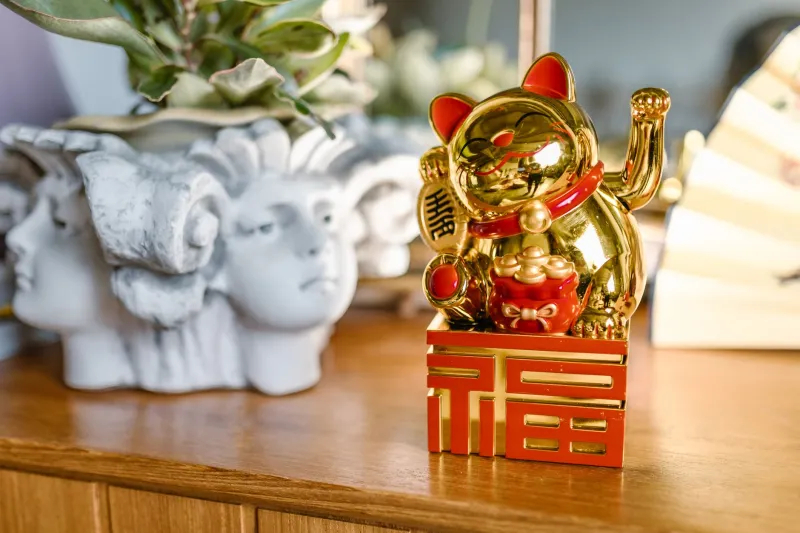
Picture this: It's 11 p.m. on a Tuesday. A 27-year-old software developer in Austin is about to place a $50 bet on a Thai Premier League match. Before he confirms the wager, he checks the lunar calendar on his phone, glances at the red lucky charm dangling from his monitor, and taps the screen three times — a habit he picked up after spending six months on an Asian gaming platform. He's not Vietnamese. He didn't grow up with these traditions. But somewhere along the way, the rituals stuck.
This isn't an isolated story. Across the US, a growing wave of players on Asian gaming platforms are quietly adopting superstitions and lucky systems that have deep roots in Vietnamese, Chinese, and broader Southeast Asian culture. And the platforms themselves? They're not just tolerating these behaviors — they're actively designing around them.
Where Superstition Meets Platform Design
If you've spent time on KeoNhaCai888 or similar Asian gaming platforms, you've probably noticed the aesthetic isn't accidental. The prevalence of red and gold, the repeated use of the number 8, the way certain promotions drop at specific times of day — none of that is arbitrary. It reflects a design philosophy rooted in traditions that have shaped gambling culture across Asia for centuries.
In Vietnamese and Chinese numerology, 8 is considered the luckiest number because its pronunciation resembles the word for prosperity. The number 4, on the other hand, sounds like the word for death in several Asian languages, which is why you'll almost never see it featured prominently in platform design. These aren't just aesthetic choices — they're psychological signals that tell players: this space understands luck the way you understand luck.
Platform designers working in the Asian gaming space have talked openly about how these elements are baked into the user experience from the ground up. Color palettes, reward animations, even the timing of jackpot notifications during peak auspicious hours on the lunar calendar — all of it is calibrated to resonate with players who believe the environment around a bet matters just as much as the bet itself.
The Psychology Behind Why It Actually Changes How You Play
Here's where things get genuinely interesting from a behavioral science perspective. You might expect that superstitions are just harmless background noise — a little ritual that makes you feel better without actually affecting your decisions. But research in cognitive psychology suggests otherwise.
Belief in a lucky system activates what psychologists call the "illusion of control," a well-documented cognitive bias where people feel more confident and focused when they perceive themselves as having some influence over random outcomes. The fascinating thing isn't whether the superstition is "real" — it's that the belief itself produces measurable changes in behavior.
Players who engage in pre-bet rituals tend to make more deliberate decisions. They slow down. They commit more fully to their chosen strategy instead of second-guessing at the last moment. In a gaming environment where impulsive decisions are often the enemy of a good session, that kind of mental anchoring has real value.
This is part of why Asian gaming platforms have been so effective at integrating these rituals into their mechanics. It's not manipulation — it's meeting players where their psychology already is.
Red Envelopes, Lucky Hours, and the Gamification of Fortune
One of the most visible examples of this integration is the digital red envelope — a direct adaptation of the hồng bao tradition in Vietnamese and Chinese culture, where money is gifted in red envelopes during celebrations as a symbol of good luck and prosperity. On platforms like KeoNhaCai888, digital red envelopes appear as surprise bonuses, login rewards, or community gifts during holidays and special events.
For American players, the red envelope started as a novelty. Over time, for many, it became something more — a small ritual of anticipation that bookmarks the gaming experience in a meaningful way. Players report looking forward to these moments not just because of the potential reward, but because of the feeling the tradition carries with it.
Then there's the concept of auspicious timing. Several Asian gaming platforms surface information about favorable hours according to the lunar calendar, essentially letting players choose when to place their bigger bets based on traditional frameworks of fortune. To a Western player raised on purely statistical thinking, this might sound like noise. But a surprising number of US players have started consulting these features — not necessarily because they fully believe in lunar timing, but because having a structured decision-making framework reduces the anxiety of choosing when to act.
Americans Aren't Just Tourists in This Tradition
What's striking about the adoption of Asian gaming rituals by US players isn't just that it's happening — it's how it's happening. It's not ironic. It's not purely aesthetic. Many American players on Asian platforms describe a genuine shift in how they approach their sessions after spending time in these environments.
Part of this comes down to contrast. American sports betting culture, especially the mainstream apps that exploded post-PASPA, tends to be relentlessly data-driven. Lines, spreads, prop bets, analytics overlays — the experience is designed to feel like a Bloomberg terminal. There's a reason that appeals to a certain kind of player. But there's another kind of player who wants the experience of betting to feel like something — to carry a sense of meaning and ritual beyond the cold calculation of expected value.
Asian gaming platforms offer that. The lucky colors, the numbered symbolism, the calendar-aware promotions — they create an atmosphere where the act of betting feels embedded in something larger than a single transaction. For players who grew up with sports as a communal, almost spiritual experience, that resonates deeply.
Ritual as Strategy: Finding the Real Edge
So does any of this actually help you win? Let's be honest: no ritual changes the underlying math of a game. The house edge is what it is. But here's the more useful question — does having a consistent pre-game ritual help you play better?
For a lot of players, the answer is yes. Not because the luck is real, but because the ritual is a form of mental preparation. It signals to your brain that you're entering a focused, intentional state. It creates a boundary between casual browsing and deliberate play. It slows down the impulsive swipe-and-tap behavior that leads to chasing losses.
In that sense, the Asian gaming tradition of treating a bet as a considered act — something you prepare for, time thoughtfully, and approach with intention — is genuinely good advice dressed up in the language of fortune.
Whether you knock three times, check the lunar calendar, or just take a breath before confirming your wager, the ritual matters. The platform knows it. The psychology backs it up. And increasingly, American players on Asian gaming sites are figuring it out for themselves.
Maybe that software developer in Austin is onto something after all.