Cashing Out Without a Bank: How US Players on Asian Gaming Platforms Are Moving Money in Ways Wall Street Has Never Seen
You hit a solid parlay. Your balance is sitting pretty. Then you go to withdraw, and your bank declines the transaction like you tried to buy something sketchy off a back-alley website. Sound familiar?
For a growing number of US players who've made the switch to Asian gaming platforms, this frustration isn't new — but neither is the workaround. Over the past several years, a quiet financial ecosystem has grown up around online gaming, one that operates parallel to traditional banking and, frankly, works a whole lot better for players who know how to use it.
Let's break down exactly how this shadow economy of payments functions, why US banks are so allergic to gaming transactions, and what the whole situation tells us about the future of money in America.
Why Your Bank Keeps Saying No
Here's the uncomfortable truth: most major US financial institutions — your Chase, your Bank of America, your local credit union — are deeply uncomfortable with online gambling transactions. It's not entirely their fault. Under the Unlawful Internet Gambling Enforcement Act of 2006, known as UIGEA, banks and payment processors are prohibited from knowingly accepting transactions related to unlawful internet gambling. The key word is knowingly, which means many institutions take the nuclear option and block anything that even smells like a gaming platform.
This creates a bizarre situation where perfectly legal players in states with regulated online gaming still get flagged. The system is blunt, and it catches a lot of legitimate activity in the crossfire. For US players accessing international Asian gaming platforms, the friction is even higher — international merchant codes, unfamiliar currencies, and cross-border transfers all raise flags that trigger automatic declines.
So what do players do? They adapt.
The Rise of the Digital Wallet Layer
The first and most popular workaround is the digital wallet — and not just PayPal, which has its own strict anti-gaming policies. We're talking about platforms like Skrill, Neteller, and increasingly, regional Asian payment apps that have found their way into the US market.
The mechanics are simple: instead of sending money directly from your bank to a gaming platform, you fund a digital wallet using a standard bank transfer or debit card. The wallet then acts as an intermediary, sending funds to the gaming platform under a different merchant category. For withdrawals, the process runs in reverse — winnings land in your wallet, and you transfer to your bank account on your own schedule.
For Asian gaming platforms specifically, this model has been refined over years of operating in markets where banking infrastructure is inconsistent or heavily regulated. Vietnamese, Thai, and Filipino fintech companies have built some of the most elegant wallet ecosystems in the world precisely because they had to. US players are now benefiting from that ingenuity.
Peer-to-Peer Transfers: The Informal Network
Beyond wallets, there's a more informal layer of the ecosystem: peer-to-peer (P2P) transfer networks. These operate similarly to how you'd split a dinner bill on Venmo, except the counterparty is often a verified agent or broker working with the gaming platform.
In practice, a player deposits funds by transferring money to an individual account — sometimes via Zelle, sometimes via regional apps like GCash (originally Filipino but now used across diaspora communities in the US), or even through WeChat Pay among Chinese-American players. The gaming platform's agent confirms the transfer and credits the player's account.
This sounds informal, and honestly, it is. But it's also remarkably efficient. Transactions settle in minutes rather than the 3-5 business days a traditional wire might take. For players who want to act fast on a live sports line or jump into a time-sensitive casino promotion, that speed matters enormously.
The risk, of course, is that this system relies on trust and verification in ways that traditional banking doesn't. Reputable Asian gaming platforms have developed multi-step verification processes and escrow-style protections to reduce exposure, but players should absolutely do their homework before using any P2P channel.
Crypto: The Bridge That's Becoming a Highway
Cryptocurrency deserves its own mention here, even though it's been covered extensively elsewhere. What's worth noting in this specific context is how crypto functions not just as a payment method, but as a translation layer between the traditional financial system and the alternative ecosystem.
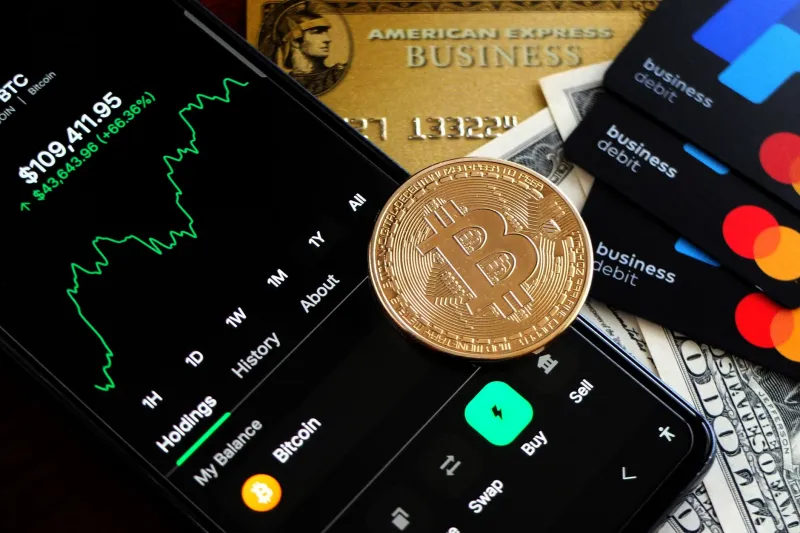
Many US players who use Asian gaming platforms don't start with crypto — they end up there after getting burned by bank declines one too many times. Bitcoin, USDT (Tether), and increasingly USDC have become the preferred bridge currency: easy to acquire through US-based exchanges like Coinbase, accepted natively by most major Asian gaming platforms, and withdrawable back to fiat through the same exchanges.
The stablecoin angle is particularly interesting for risk-averse players. USDT doesn't fluctuate the way Bitcoin does, so your $500 withdrawal doesn't suddenly become $430 because the crypto market had a bad afternoon. For everyday gaming transactions, stablecoins are quietly becoming the most practical option available.
Regional Banking Networks and the Diaspora Advantage
There's another piece of this puzzle that doesn't get enough attention: the role of diaspora banking networks. Across cities like Houston, Los Angeles, San Jose, and New York, Vietnamese, Chinese, Filipino, and Korean-American communities have maintained relationships with regional banks and credit unions that are far more comfortable with international transactions than the big national players.
These institutions — think East West Bank, Cathay Bank, or smaller community credit unions serving specific ethnic neighborhoods — often have direct correspondent banking relationships with financial institutions in Southeast Asia. That means transfers that would trigger flags at Chase go through cleanly at a community bank with established Asian ties.
For US players who have access to these networks, either through family connections or by proactively opening accounts at diaspora-friendly institutions, the payment experience on Asian gaming platforms is dramatically smoother. It's a genuine competitive advantage that the broader US gaming community is slowly waking up to.
What This All Means for the Future
The patchwork of wallets, P2P agents, crypto bridges, and diaspora banking isn't just a workaround for today's problems — it's a preview of where financial services are headed more broadly. The traditional banking model, built around centralized institutions and regulatory compliance-by-blunt-instrument, is increasingly out of step with how money actually moves in a globalized, digitally-native world.
Regulators are starting to notice. The Consumer Financial Protection Bureau has been paying closer attention to digital wallet ecosystems. Several states have introduced fintech sandbox legislation that could eventually create cleaner, legal pathways for gaming-related payments. And the broader push toward open banking — where consumers control their own financial data and can route payments more flexibly — could eventually dissolve much of the friction that currently plagues international gaming transactions.
For now, though, the players who thrive on Asian gaming platforms are the ones who've taken the time to understand these alternative channels. It's a bit of a learning curve, but once you've navigated it, the experience on the other side — faster payouts, lower fees, and access to some of the best gaming content in the world — makes the effort worthwhile.
The banks may not want your winnings. But there are plenty of other ways to bring them home.